
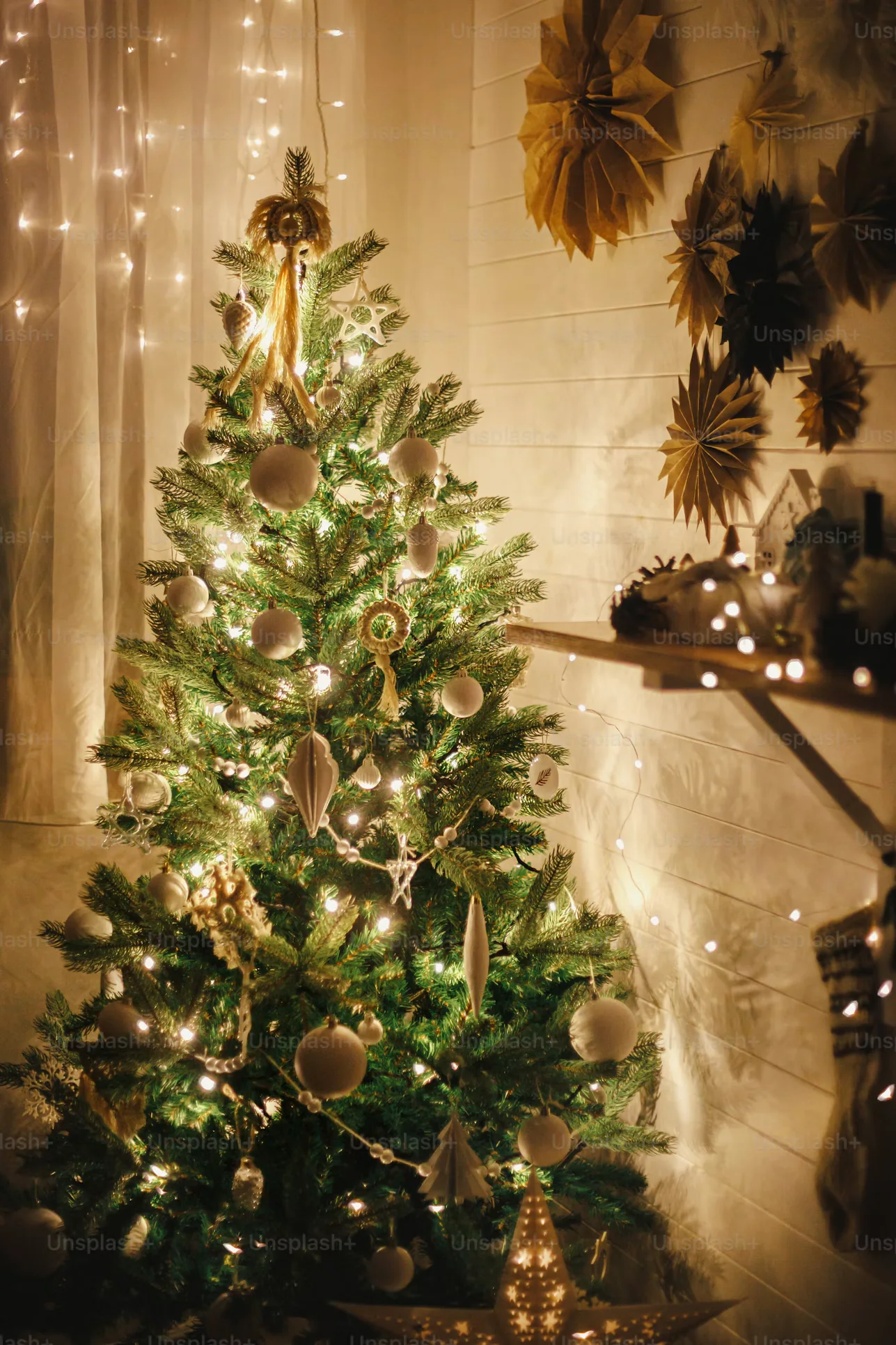
There is a particular kind of Christmas tree that makes a room feel welcoming before anyone has even noticed the ornaments. It is not necessarily the tallest tree, the fullest one or the one with the most expensive decorations. Usually, it is a tree that belongs to its surroundings: the lights match the mood of the room, the colors feel considered and the finishing touches have somewhere to breathe.
If your goal is a warm, cozy Christmas tree, the most useful design decision happens before the first bauble goes on. Decide what you want the space to feel like at night. Are you hoping for a traditional fireside Christmas, a quiet room full of candlelight, or a playful, colorful corner that makes children smile? That answer will make the shopping and decorating much easier.
Choose a mood before choosing decorations
A cohesive tree does not require perfectly matching ornaments. In fact, a few personal or mismatched pieces can make it more meaningful. But it helps to have a visual direction. Three dependable starting points are:
- Classic and inviting: warm-white lights, deep red ribbon, gold or champagne ornaments and green foliage.
- Quiet and natural: soft white lights, cream textiles, wooden details, paper ornaments and muted metallic finishes.
- Colorful and nostalgic: multicolored accents, a mix of personal ornaments, simple garlands and gifts wrapped in cheerful patterns.
Take a photo of the room in ordinary daylight. Look at the sofa, curtains, rug and existing furniture before buying anything. If the room is already full of pattern, let the tree be calmer. If the room is minimal, a little more color can be a lovely contrast. The tree should be a feature, not a completely separate design universe.
Begin with the lighting, not the ornaments
String lights are the foundation of a cozy-looking tree because they determine how the tree reads after sunset. A warm glow can make even a modest tree look generous and inviting. Before hanging ornaments, turn on the lights and step to the doorway. Look for dark gaps and any clusters that feel too bright.
One approach is to work the lights loosely through the branches rather than wrapping only the outer edge. This creates depth: some bulbs appear near the trunk, others closer to the tips. Avoid pulling strings so tightly that the branches are distorted. For any electrical lights, follow the product's instructions, inspect cords and use only the location rating the manufacturer specifies.
If you prefer gentle accents beyond the tree, warm-white fairy lights(paid link) can help echo its glow on a mantel or windowsill. These are inspiration ideas, not a statement that a particular light set has been tested by BeatRoam Studio.
Make a simple ornament palette feel layered
Limiting the color palette does not mean limiting texture. A tree decorated entirely with one flat finish can look less interesting than a tree with a few coordinated materials. Try pairing matte ornaments with a handful of reflective ones, or glossy red ornaments with softer ribbon and understated gold pieces.
For balance, distribute the largest ornaments first. Place them around the tree rather than all on the most visible side. Then add medium and smaller ornaments to fill the spaces between. A few pieces tucked deeper into branches make the tree feel fuller without increasing the overall number of decorations.
If you like a familiar traditional palette, red and gold Christmas ornaments(paid link) are one direction to explore. Before buying, check the actual listing for size, quantities and materials; decorative sets vary widely in scale and finish.

Use ribbon to give the tree a point of view
Ribbon is a surprisingly effective styling tool. It can make a tree feel softer, more romantic, or more playful depending on its width and finish. Rather than winding ribbon tightly in perfect circles, try relaxed lengths that travel down sections of the tree or individual bows placed in a loose rhythm.
A deeper red ribbon can look especially rich among green branches and warm light. The Ribbli red holiday ribbon(paid link) is the kind of product to examine if you are building a classic red-and-green scheme. Check the listing's current width and finish before deciding whether it will hold the shape you want.
Not every tree needs ribbon. If the ornaments are meaningful, colorful and varied, leave more of the branches visible. Sometimes the absence of one extra layer is what makes the whole composition look intentional.
Give the area beneath the tree the same attention
A tree is not experienced in isolation. The presents underneath it, the nearest chair and the floor around its base all contribute to the impression. Coordinated wrapping does not have to be expensive: repeating one paper color and one ribbon tone can make unrelated gifts look like part of the same scene.
When the space is tight, avoid surrounding the base with so many boxes that it blocks movement. Leave room to water a real tree if you have one and keep pathways clear. Try arranging a few larger gifts at the back and smaller boxes toward the front. If you have a tree skirt, let some of it show so the tree does not look visually weighed down.
Our Christmas gift-wrapping guide explains how to coordinate paper, tags and ribbon without making wrapping feel like a second job.
Style the surrounding room in three small moves
You do not need a fully decorated home to create a convincing Christmas atmosphere. A few repeated details around the room are often enough:
- Repeat the tree's color in a soft furnishing. A plaid throw or velvet cushion picks up the holiday palette without being overtly themed.
- Add one low source of light. Flameless candles or a small string-light display make the room feel layered after dark.
- Bring in one touch of greenery. A garland along a shelf or mantel connects the tree to the rest of the space.
For those finishing details, browse the Christmas décor and gifts collection. Treat the collection as a menu of ideas rather than a shopping checklist: you rarely need all of them.
The decorating mistakes that change the mood
Overdecorating often happens in stages. You add more ornaments to fix a bare patch, then more garland to balance the ornaments, then a bigger topper because everything else now feels busy. When that happens, the better fix is usually to remove something, not add more.
Other common pitfalls include choosing ornaments without checking their size against the tree, mixing several different light temperatures and ignoring how the display looks from your everyday seating position. The tree should feel enjoyable from the sofa, not only from the angle used for a photograph.
Finally, consider safety as part of styling. Keep a real tree watered and follow its care instructions; do not position it where it blocks an exit or comes too close to heating equipment. For all lights and electrical décor, follow the relevant manufacturer guidance rather than assuming indoor and outdoor products are interchangeable.
A 30-minute refresh for a tree you already own
If your tree is standing and you want a quick change rather than a shopping trip, start by switching it on at dusk. Turn off the room's overhead light. Remove any ornaments that clash most with the color palette you want, redistribute the larger pieces, and leave a little breathing room. Straighten or simplify the ribbon. Finally, tidy the gift area and add just one coordinating detail to the room.
The goal is not perfection. A cozy tree looks like part of a home where people will sit, talk, eat and unwrap gifts. That is what makes it memorable.
Frequently asked questions
Do all the ornaments need to match?
No. A limited palette can help, but sentimental or handmade decorations can be the most charming pieces on the tree. Balance them with simpler ornaments rather than hiding them.
Are warm-white lights always the best choice?
Warm-white is useful for a softer, candlelit mood. Multicolor lights can be equally appealing for nostalgic or playful styling. Choose the atmosphere you want, not a universal rule.
How can I make an inexpensive tree look fuller?
Shape and separate its branches carefully, place a few larger ornaments deeper inside and distribute the lighting evenly. You may not need more décor at all.
What is the easiest way to update last year's decorations?
Change one element with a strong visual effect — ribbon, wrapping paper or the ornament color mix — instead of replacing the entire collection.
Where should I start if the tree overwhelms the room?
Reduce surrounding clutter first, then simplify the tree's palette. In a smaller space, choosing a slimmer tree may be more effective than buying smaller ornaments.
The takeaway: A beautifully decorated Christmas tree is less about how much you buy and more about repeating a mood. Begin with light, keep the palette purposeful and let the room around the tree participate.
BeatRoam Studio publishes independent style and buying guides. We do not claim personal testing of the individual linked products. Before buying, review product specifications, materials, safety instructions, and seller terms on the live retailer listing.